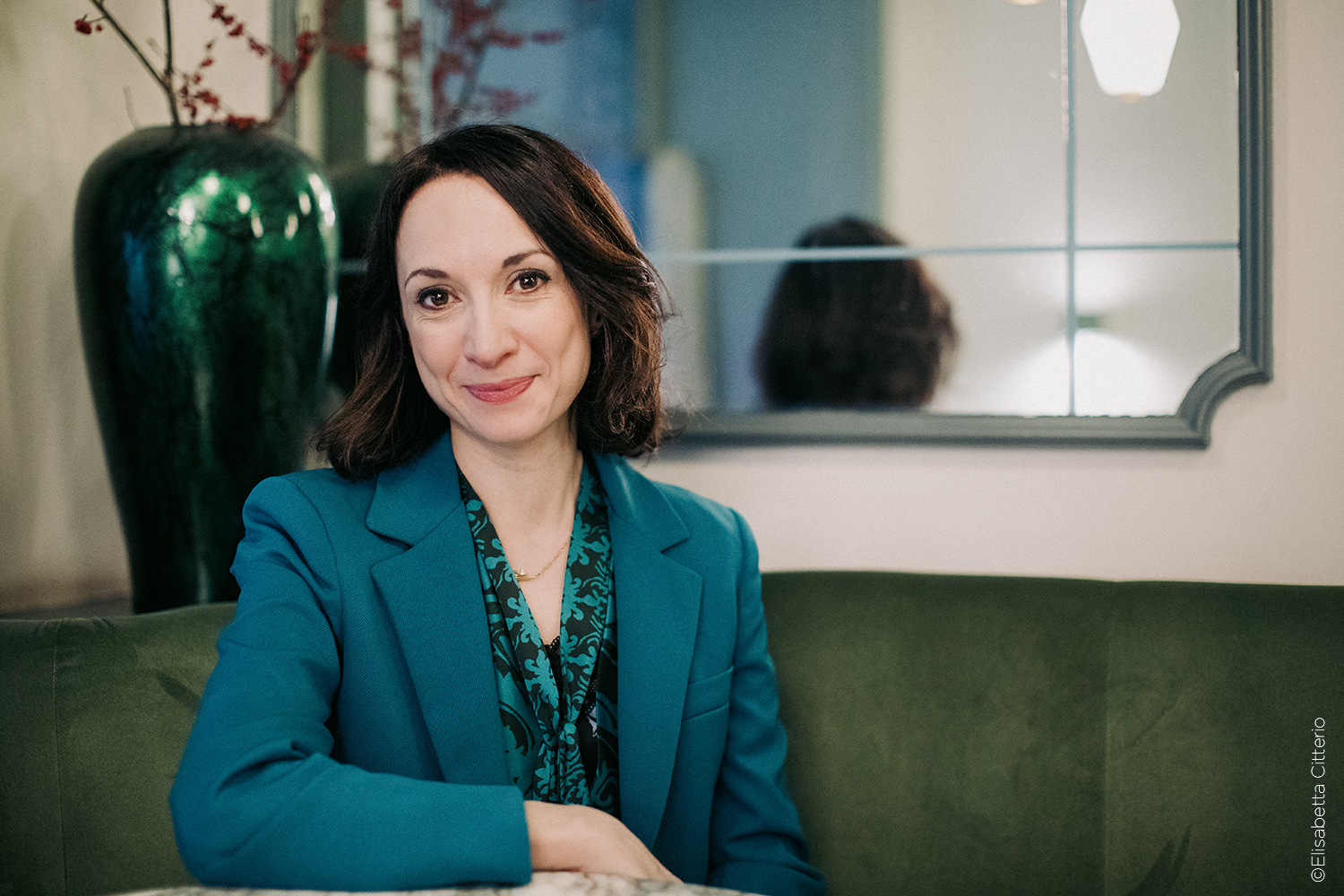
Dr. Francesca Granata, Research Fellow at Ospedale Policlinico di Milano, Italy, Milano 2024.
FOLLOW YOUR POSITIVE DRIVE. BE RESILIENT. GO OUT THERE TO COMMUNICATE YOUR SCIENCE AND SHINE TO THE WORLD.
Francesca Granata is a Research Fellow at Ospedale Policlinico di Milano. She graduated in Biology from the University of Milan, specializing in Cell Biology and Nutritional Science.
Following the diagnosis of erythropoietic protoporphyria, a condition that causes phototoxicity to sunlight, she became a patient-researcher, dedicating her career to studying porphyrias, a group of rare genetic metabolic diseases. Her work also spans diagnostics, nutrition, and scientific consulting for drug approval.
A passionate science communicator, she participated as a speaker at TED Talk 2021 and has written articles on rare diseases and nutrition, with the goal of making science accessible to everyone.
Recognized as an expert in porphyrias, she published in prestigious scientific journals and participated in numerous scientific events, also as an organizer. In 2023, she founded the Vivi Porfiria association, where she serves as president, and played a key role in establishing the National and World Porphyria Awareness Day. Her training in patient empowerment has given her a deep understanding of patient rights and healthcare access.
Francesca Granata is a Research Fellow in the Department of Medicine and Metabolic Diseases at Ospedale Policlinico in Milan.
Graduated in Biology from the University of Milan, she completed her studies with a Master’s Degree in Cell Biology and a specialization in Nutritional Science. Following the diagnosis of erythropoietic protoporphyria, a condition that causes phototoxicity to sunlight, she became a patient-researcher, dedicating her career to studying porphyrias, a group of rare metabolic diseases affecting heme biosynthesis.
Since 2009, she has worked as a researcher in rare hematological diseases, specializing in the diagnosis and research of porphyrias. She focused particularly on the study of inflammation, the complement system, and heme biosynthesis in porphyrias, as well as on the analysis of transporters involved in photosensitivity and liver disease characteristic of these conditions. She is also actively involved in epidemiological studies on porphyrias in Italy.
Her career has extended beyond research, exploring diagnostics, nutrition – which she considers an essential aspect of human health – and scientific consulting for drug approval processes.
Additionally, Dr. Granata is committed to sharing her knowledge by writing popular science articles, making complex topics such as diseases and nutrition more accessible. She firmly believes in the importance of clear and accurate communication that is understandable to everyone.
She authored 42 articles in international scientific journals, including contributions to prestigious journals such as a commentary in The New England Journal of Medicine, a letter in Lancet Hematology, and an original article in Science. Recognized nationally and internationally as an expert, Granata has spoken at numerous scientific conferences and participated in various communication events, some of which she personally organized.
Years of experience in healthcare have given her a deep understanding of its complex dynamics. Since 2018, she has been a scientific advisor and co-founder of the International Porphyria Patient Network (IPPN), a group of scientists who, like her, are affected by erythropoietic protoporphyria. In 2023, she founded Vivi Porfiria, the Italian Association of Patients affected by porphyria, and currently serves as its President.
She has represented the porphyria patient community at major international conferences and helped establish the first National Porphyria Day, bringing together patients, clinicians from across Italy, and researchers. Her training in patient empowerment has equipped her with strong communication skills — demonstrated in her 2021 TED Talk — as well as a solid understanding of patient rights, and expertise in healthcare access processes.
She is currently working on her first popular science book, scheduled for publication at the end of 2026. The project weaves together history, medicine, and personal experience, exploring rare diseases across past and present, and examining how research, language, and identity can reshape the course and the meaning of a diagnosis.
Her vision in her own words: “I strongly believe in a clear and accurate communication that is accessible to everyone.”
Keywords: Erythropoietic Protoporphyria, Rare disease, Acute Intermittent Porphyria, Variegate Porphyria, Hereditary Coproporphyria, Porphyria Cutanea Tarda, Congenital Erythropoietic Porphyria, ALA-D Deficiency Porphyria.
Milan – May 18th, 2026
What made you decide to pursue a career in scientific research, and what experiences shaped that choice?
There wasn’t a specific moment when I decided to dedicate myself to scientific research; it was more of a gradual path, built step by step through different experiences and circumstances that guided me along the way. In particular, what I consider the two main pillars of my life inspired me and shaped my choices, sparking my passion for science.
The first pillar is curiosity, which has been with me since I was a child. I think that even as adults, curiosity remains the foundation and backbone of research: that “little voice”, that inner drive typical of children, which every researcher must learn to keep alive.
The second pillar comes from my personal story. When I was two years old, the first symptoms appeared of what was later described in many different and often incorrect ways: “sun intolerance”, “sun allergy” for some people, “grattarola”, as my father used to call it, and many other nicknames during the twenty-one years that passed before I finally received a definitive diagnosis.
And yet, being curious and stubborn by nature, I always felt there was something more going on — something beyond just a sun allergy, a psychiatric condition, or a neurological disorder, as had been suggested. I could feel that something tangible in my body was not functioning as it should, and I knew it was not psychological. From that feeling came the desire to understand.
Convinced that my condition might be a rare disease, in 2002 I bought online the main international reference encyclopaedia used for the classification and nomenclature of rare diseases, Orphanet Disorders by Orphanet – today a leading platform and database for rare diseases and orphan drugs (https://www.orpha.net/it). At the time, it still existed in printed form. I started reading it from the letter “A”, gradually ruling out the different possible conditions. Back then there were about 6,000 identified rare diseases- not the 8,000 we talk about today- so I began my reading journey, one step at a time. The more I read, the more I realised how interesting I found that field. I understood that this was a context where I could really explore and cultivate my curiosity.
My path into research was somewhat unusual. I enrolled in a biology degree partly out of necessity, to find an answer to my illness, but also out of curiosity, with the desire to start from the basics. I had always been a very curious child. I was especially fascinated by anything related to the animal kingdom, and I loved visiting natural history museums. I was looking for answers, but also for an environment that could nurture and stimulate my curiosity.
During my studies I went through several possible explanations for my illness, from lupus erythematosus to xeroderma pigmentosum. Then one day, during a biochemistry lecture, a professor was talking about porphyrias in relation to the heme biosynthetic pathway. At that moment, I had a real flash of insight and thought that this could explain my symptoms. I immediately went back to my encyclopedia and, since I hadn’t reached the letter “P” yet – which was near the end – I started reading the entry on “porphyrias” very carefully.
That was when I discovered the porphyria reference centre in Rome, at San Gallicano Hospital. My father went with me, and that’s when I finally received my diagnosis. The doctor in charge at the time, Dr Biolcati, asked me: “Why don’t you do your thesis here with us?”. I told him that, since I lived in Milan, moving to Rome would have been complicated, especially because of my photosensitivity. So instead, I contacted Professor Cappellini in Milan and asked whether I could do my thesis with her at the Policlinico of Milan. I started there as a student, and later I became a researcher.
What do you love most about science, and what motivates you in your daily research work?
For me, the key thing is having the opportunity to take a multidisciplinary approach, because research can easily get very specialised and compartmentalised. I believe being a scientist isn’t just about having intellectual curiosity, but also the opportunity to explore different fields, with much more freedom than in more traditional jobs, to try new things, and push boundaries. One of the reasons I’m motivated to work across disciplines is exactly this: being able to show my students, who come into the lab every day, that this kind of freedom is possible. My passion for science stems mainly from the “nerdier” side of the work—being in the lab, experimenting, observing, and building new knowledge day by day.
Although I haven’t yet made any groundbreaking discoveries, I still try, in my own way, to contribute to advancing our understanding of the pathophysiological mechanisms of porphyrias – particularly protoporphyria. I also work on other conditions, such as thalassemia, contributing my scientific and technical expertise.
At the same time, I try to break down the stereotypes surrounding scientists, who are often portrayed as ‘lab rats’, isolated and detached from real life. This image frustrates me, because, for me, research is a vibrant, living experience, deeply connected to the world and to people.
For this reason, I decided to engage with science communication as well, even though I don’t have an Instagram account like some well-known scientists. I hope to develop this aspect of my work further in the future and to help build a shared culture with patients, because unfortunately there is still a significant gap between doctors and patients. Patients, instead, need to be empowered: they need knowledge in order to manage their condition as effectively as possible. Understanding your own condition helps you face it better. In my case, for example, I’m able to manage my illness well because I know it inside out and I don’t ignore it.
Many of my fellow patients, however, are not always fully aware of their symptoms: they tend to underestimate them and sometimes end up enduring even very intense pain to feel and appear “normal.” After my TED Talk, for example, some patients – including peers with the same condition – wrote to thank me: they had shown the video to a teacher or a classmate and, only then, were finally able to make others understand what they were experiencing.
With the aim of giving voice and support to all patients, I founded a national association that brings together all eight types of porphyria, not just my own, erythropoietic porphyria, and I have served as its president since April 2023. I structured it like a company. For the board, I selected patients, especially younger ones, because it is time to move beyond the idea that patient associations are only for people who are already retired and who often lack an up-to-date perspective on society. Unfortunately, this is still how things work today because the role of “patient advocate” is not yet recognised as a profession. However, things are gradually changing. I also dream of one day being able to change careers and dedicate myself to this field. I selected each member based on their specific expertise: those working in communication manage the website, we have a lawyer, an accountant, someone working in banking, and a biotechnologist. Each of them has a different type of porphyria. The idea is to value differences and not be afraid of diversity, a principle that also lies at the heart of the philosophy that guides research.
For me, a researcher is also, in a sense, an artist. We need to stop imagining them as “nerds” locked away in a lab and instead recognize them for what they have always been: small philosophers of science. We need to recover this idea of their multifaceted nature, which has characterized them since the past.
Beyond showing that women can and should be scientists — something that, not so long ago, still felt almost unthinkable because of deep-rooted cultural biases — I also want to stress that we can do this without giving up our femininity. Being well-groomed, feeling beautiful, and having our own personal sense of style are part of our strength, not something that gets in the way.
I’d also add that, living with a condition related to sun exposure, my careful choice of protective clothing isn’t just a medical necessity—it’s also a way of expressing who I am as a woman. I try to turn what could be seen as a limitation into part of my identity, so that even something like wearing cotton gloves in the middle of summer becomes a style detail rather than a mark of stigma.
Personally, I do pay attention to my physical appearance even in scientific settings, and I’m often perceived as egocentric, as if I were simply seeking attention or visibility. But that’s not the case at all. What I want to show my students and colleagues is that there is another way of being: taking care of yourself doesn’t take anything away from your competence—in fact, it can strengthen your self-esteem. Loving and valuing yourself builds confidence. It makes you more secure in the words you choose and in the actions you take, and it ultimately brings you closer to achieving your goals.
Another reason I love being in the lab is my start-up project: being both a researcher and an entrepreneur allows me to bring together scientific passion and innovation. I turn “super nerd” ideas into “pop” projects that are accessible and engaging.
I’ve even been nicknamed “the one who pulls all patients in” because whenever I meet a patient with particularly interesting characteristics, I invite them to take part in a project.
For example, I collaborated with the editor-in-chief of Focus Junior on the production of a documentary about protoporphyria entitled Overexposed. A film about light and Erythropoietic Protoporphyria. In addition, together with a psychologist who shares my condition, I co-authored a review that summarizes the literature published from 1987 to the present on the psychological aspects of rare diseases, with a particular focus on porphyrias.
From 2023 to the present, with Vivi Porfiria, I have worked to turn the association into a concrete tool for patient support and networking.
We’ve produced educational leaflets distributed to all patients, developed scientific and outreach content on social media—today the page is followed by nearly 800 people—and created sections such as “The doctor answers,” interviewing clinicians from across Italy in short, accessible knowledge clips, thereby building strong links between the scientific community and patients.
We are also developing a special card with a QR code to be given to patients, which can be used in emergencies and contains the ABCs of managing the different forms of porphyria, as well as a list of reference centres. We have promoted a fundraising campaign for two children affected by ALA-D deficiency, the most severe form of hepatic porphyria, to support their families in purchasing a suitable vehicle for their transport.
We’ve also actively contributed to the activation of a centre for a clinical trial, working in close synergy with healthcare professionals, and launched the online campaign “It’s not just a stomach ache,” which generated thousands of views and helped raise awareness of symptoms that are often overlooked.
Finally, together with my vice-president Giulia Schiavina, a biotechnologist, we’ve created a PowerPoint-based format to organise educational and technical seminars on porphyrias, with the aim of spreading rigorous yet accessible scientific knowledge among both patients and healthcare professionals.
What message would you like to share with other women and young people who dream of becoming scientists, regardless of gender?
One thing I always tell young people is: go for it, do it, have the courage to step out of the lab. If you’ve got an idea or something on your mind, develop it.
The real “call to action” is not giving up—follow your ambition and what you’re naturally drawn to, without letting yourself be held back by social stigmas like “women can’t be engineers.”
If you feel that drive inside you, then just go for it: dare, try, even if it sometimes goes against your parents’ expectations or what society thinks you should do. I truly believe that if you’re honest with yourself, you’re unlikely to end up as a frustrated adult.
Of course, money matters—because without financial independence you don’t have the freedom to live your life. But what really counts is following your own path all the way, without holding back. It may sound obvious, but it’s the most honest advice I can give.
What does success mean to you?
For me, success means waking up in the morning excited to go to the lab and feeling happy. Of course, absolute happiness doesn’t exist—it’s an illusion we have been chasing forever, often in the wrong way. At the same time, within a single day, you can go from feeling happy to feeling very sad in the space of an hour. But real success lies in feeling fulfilled inside and in staying true to yourself and your passions.
I don’t deny there’s also external success: giving a TED Talk, recording a podcast, or taking part in programmes like Elisir are all important milestones. But it’s not success just because you appear on TV—these days we’re all on social media anyway. Real success comes when, as a person, you manage to realise your dream, take science out of institutional settings, and use it to contribute to other people’s well-being.
For me, the greatest success is making science understandable: avoiding jargon and explaining complex concepts in a simple way. When I talk about what DNA is in the simplest way possible, I see people become genuinely interested. Science is fascinating because curiosity belongs to everyone—every child is curious. I was lucky to have parents who nurtured that curiosity rather than suppressing it. They gave me freedom, support, including financial support—because science, unfortunately, is not well paid—and they allowed me to build my own path. I will always be grateful for that.
What’s your sense of the presence and role of women in your field?
To be honest, in recent years I’ve noticed a significant change. I remember that in 2010, during my first interview at the Policlinico, there was a painting in the meeting room showing a patient surrounded exclusively by male doctors. At my very first meeting, however, we were all women. In that moment I smiled, also thinking back to the subtle forms of bullying and the prejudice I had to face at the beginning of my career.
Among the younger generations, I see much greater equality: young women are more confident, and there is a stronger openness to dialogue and exchange. What hasn’t changed enough, however, is the situation at decision-making levels, which are still largely occupied by men. The change is underway, but the path towards female leadership is still long and requires our continued commitment.
Do you think men and women have different approaches to science in their daily work?
I work in a lab where there is a predominantly female presence, but when I’ve worked with men, I’ve noticed that women often tend to go more in depth. Men and women are different, including from a biological point of view, and this is also reflected in brain function: women tend to show greater neural interconnectivity. Hormonal balance also influences personality and ways of thinking. I’ve noticed, for example, that women often explore issues more deeply and pay very close attention to detail, while men tend to have a broader, more general overview.
In the lab, I believe both attitudes are essential and complement each other. The differences I’ve mentioned are not meant as a gender-based judgment, but rather as a reference to objective biological characteristics. Preserving and valuing these differences, in my view, is part of our responsibility.
It’s simply a different way of approaching work. Fortunately, we are different, and that diversity is a strength. Looking back at the painting of only male doctors I saw as a young girl, I initially smiled, thinking that in labs we were finally all women. Today, however, I believe the right balance would be a 50-50 presence of men and women.
I truly believe in diversity: men and women should have the same rights and opportunities, without women having to act like men to be taken seriously. What we need today is collaboration, not conflict—just like in research: if you keep everything to yourself, you don’t get very far. That’s why I believe researchers shouldn’t remain closed off in the lab, but instead open to dialogue: involve patients, explain their work, and listen to questions. It is precisely through this exchange that research becomes richer and more meaningful for everyone.
Foto: Dr. Francesca Granata, Ricercatrice presso l’Ospedale Policlinico di Milano, Italia, Milano 2024. ©Elisabetta Citterio 2024.
Segui il tuo slancio positivo. Sii resiliente. Esci allo scoperto per comunicare la tua scienza e brilla agli occhi del mondo.
Francesca Granata è ricercatrice sanitaria presso il Dipartimento di Medicina ad Indirizzo Metabolico dell’Ospedale Policlinico di Milano.
Laureata in Biologia presso l’Università degli Studi di Milano, ha completato il suo percorso di formazione con un Master in Biologia della cellula e una specializzazione in Scienze dell’Alimentazione.
In seguito alla diagnosi di protoporfiria eritropoietica, una condizione che causa fototossicità cutanea dolorosa, è diventata una “paziente-ricercatrice”, dedicando la sua carriera allo studio delle porfirie, un gruppo di malattie metaboliche rare causate da alterazioni genetiche che compromettono la produzione dell’eme, una componente essenziale dell’emoglobina.
Dal 2009 svolge attività di ricerca nel campo delle malattie ematologiche rare, con una specializzazione nella diagnosi e nello studio delle porfirie. La sua attività si concentra in particolare sui meccanismi infiammatori, sul sistema del complemento e sulla biosintesi dell’eme, sull’analisi dei trasportatori coinvolti nei processi di fotosensibilità e nelle malattie epatiche tipiche di queste patologie. È inoltre coinvolta attivamente in studi epidemiologici sulle porfirie in Italia.
Il suo percorso professionale è andato oltre la ricerca, estendendosi alla diagnostica, alla nutrizione – da lei considerato un aspetto fondamentale della salute umana – e alla consulenza scientifica nell’ambito dei processi di approvazione dei farmaci.
A queste attività ha inoltre affiancato un costante impegno nella divulgazione scientifica, pubblicando articoli volti a rendere comprensibili al grande pubblico temi complessi quali le patologie rare e la nutrizione.
È autrice di 42 articoli pubblicati su prestigiose riviste scientifiche internazionali, tra cui un commento scientifico sul The New England Journal of Medicine, una lettera su The Lancet Haematology e uno studio su Science. Riconosciuta come esperta a livello nazionale e internazionale, Francesca Granata ha partecipato come relatrice in numerosi congressi scientifici e ha partecipato a diversi eventi di comunicazione, contribuendo in alcuni casi anche alla loro ideazione e organizzazione.
La pluriennale esperienza nel settore sanitario le ha consentito di acquisire una conoscenza solida e approfondita delle complesse dinamiche che lo caratterizzano.
Dal 2018 è scientific advisor e cofondatrice dell’International Porphyria Patient Network (IPPN), un gruppo di scienziati affetti, come lei, da protoporfiria eritropoietica e, nel 2023, ha fondato Vivi Porfiria, Associazione Italiana dei Pazienti Affetti da Porfiria, di cui è attualmente Presidentessa.
Ha rappresentato la comunità dei pazienti affetti da porfiria in importanti conferenze internazionali e ha contribuito all’istituzione della prima Giornata Nazionale dedicata alle Porfirie, coinvolgendo pazienti, clinici da tutta Italia e ricercatori. La sua formazione nell’empowerment dei pazienti le ha conferito eccellenti capacità comunicative e divulgative, come dimostrato dalla sua partecipazione come relatrice a un TED Talk nel 2021, oltre a una profonda conoscenza dei diritti dei pazienti e delle procedure di accesso all’assistenza sanitaria.
Attualmente è impegnata nella stesura del suo primo libro di divulgazione scientifica, in uscita a fine 2026: un progetto che intreccia storia, medicina e vissuto personale, attraversando le malattie rare, tra passato e presente, per raccontare come la ricerca, il linguaggio e l’identità possano cambiare il destino di una diagnosi.
La sua visione: “Credo nell’importanza di una comunicazione semplice e corretta accessibile a tutti.”
Parole chiave: Protoporfiria Eritropoietica, Malattie rare, Porfiria Acuta Intermittente, Porfiria Variegata, Coporporfiria Ereditaria, Protoporfiria Eritropoietica, Porfiria Cutanea Tarda, Porfiria Eritropoietica Congenita, Porfiria da deficit di ALA-D.
Milano – 18 Maggio 2026
Cosa ti ha spinto a scegliere la ricerca scientifica e quali esperienze hanno influenzato questa decisione?
Non c’è stato un momento preciso in cui ho preso la decisione di dedicarmi alla ricerca scientifica; è stato piuttosto un percorso graduale, costruito passo dopo passo attraverso esperienze e circostanze che mi hanno guidato. In particolare, sono stati quelli che considero i due pilastri fondamentali della mia vita a ispirarmi e a orientare le mie scelte, accendendo in me la passione per la scienza.
Il primo pilastro è la curiosità, che mi ha accompagnata sin da piccola. Credo che, anche da adulta, la curiosità resti la base e la colonna portante della ricerca: quella “vocina”, quella spinta interiore tipica dei bambini, che ogni ricercatore deve imparare a mantenere sempre viva.
Il secondo pilastro nasce dalla mia storia personale. All’età di due anni sono apparsi i primi sintomi di quella che fu poi definita erroneamente in molti modi: “intolleranza al sole”, “allergia al sole” per alcuni, “grattarola” per mio padre, e con numerosi altri soprannomi nel corso dei ventuno anni che hanno preceduto la diagnosi definitiva.
Eppure, io, curiosa e testarda, sono sempre stata convinta che ci fosse qualcosa di più, qualcosa che andasse al di là di una semplice allergia al sole, un disturbo psichiatrico o una malattia neurologica, come era stato ipotizzato. Sentivo dentro di me qualcosa di tangibile che non funzionava come avrebbe dovuto, e non era una questione di psiche. Ed è proprio da questa sensazione che è nata la curiosità di capire. Così, convinta che il mio disturbo fosse una condizione rara, nel 2002, ho acquistato online la principale enciclopedia internazionale, punto di riferimento per la classificazione e la nomenclatura delle malattie rare, Orphanet Disorders di Orphanet – https://www.orpha.net/it l’attuale piattaforma e database delle malattie rare e dei farmaci orfani – che all’epoca era in versione cartacea. Ho iniziato a leggerla, a partire dalla lettera “A”, escludendo progressivamente le varie possibili patologie. All’epoca, le malattie rare individuate erano circa 6000 – non 8000 come oggi – e così ho iniziato il mio percorso di lettura, un passo alla volta. Più leggevo, più mi rendevo conto che quell’ambito mi interessava molto. Ho capito che in quel contesto avrei potuto mettere alla prova e coltivare la mia curiosità.
Il mio percorso verso la ricerca è stato quindi un po’ particolare: mi sono iscritta alla facoltà di biologia un po’ per necessità, per trovare una risposta alla mia malattia, ma anche per curiosità, con l’intenzione di partire dallo studio delle basi. Fin da piccola sono sempre stata molto curiosa: in particolare, mi affascinava tutto quello che riguardava il regno animale e adoravo visitare i musei di scienze naturali. Cercavo risposte ma anche un ambiente capace di alimentare e stimolare la mia curiosità.
Durante i miei studi ho fatto numerosi tentativi prima di riuscire a identificare la mia malattia, passando dal lupus eritematosus allo xeroderma pigmentoso, finché un giorno, durante la lezione di biochimica, un professore parlò delle porfirie, in relazione alla via biosintetica dell’eme. Fu allora che ebbi l’illuminazione e pensai che quella potesse essere la risposta ai miei sintomi. Così andai subito a consultare la mia enciclopedia e, dato che non ero ancora arrivata alla lettera “P”, che era in fondo, inizia a leggere in modo approfondito le informazioni contenute alla voce “porfirie”.
Fu lì che trovai il centro di riferimento per le porfirie di Roma, presso l’Ospedale San Gallicano. Mio padre mi accompagnò e finalmente arrivò la diagnosi. Il medico incaricato della funzione all’epoca, il dottor Biolcati, mi chiese: “Perché non fai la tua tesi qui da noi?”. Risposi che, abitando a Milano, Roma presentava delle complicazioni logistiche, soprattutto con il mio problema di fotosensibilità. Così mi rivolsi a Milano, alla professoressa Cappellini, chiedendo di svolgere la tesi con lei al Policlinico di Milano. Ho iniziato come studentessa e poi sono diventata ricercatrice.
Cosa ti appassiona maggiormente nella scienza e cosa ti motiva ogni giorno a proseguire la tua attività di ricerca?
Per me l’elemento chiave è la possibilità di adottare un approccio multidisciplinare, perché la ricerca può essere anche molto settoriale. Penso che il ricercatore, per la natura stessa del suo ruolo, abbia non solo l’ambizione intellettuale ma anche la possibilità concreta di esplorare diversi campi disciplinari, godendo di una libertà maggiore rispetto a chi svolge un lavoro più tradizionale. Una delle ragioni per cui sono motivata a fare ricerca in modo trasversale è proprio la possibilità di trasmettere alle mie studentesse, che arrivano ogni giorno in laboratorio, l’idea che sia possibile avere questa libertà.
La mia passione per la scienza nasce soprattutto dalla parte più ‘nerd’ del lavoro: stare in laboratorio, sperimentare, osservare e aggiungere ogni giorno nuove conoscenze.
Anche se non ho ancora fatto scoperte sensazionali, cerco comunque, nel mio piccolo, di contribuire alla comprensione dei meccanismi fisiopatologici delle porfirie e, in particolare, della protoporfiria. Lavoro anche su altre patologie, come la talassemia, portando il mio contributo tecnico scientifico.
Allo stesso tempo cerco di rompere gli stereotipi legati alla figura della scienziata, spesso immaginata come un ‘topo da laboratorio’ isolato e lontano dalla vita reale.
Questo stereotipo mi infastidisce perché per me invece la ricerca è un’esperienza viva, connessa al mondo e alle persone.
Per questo ho deciso di avvicinarmi anche alla comunicazione scientifica, pur non avendo un account Instagram come quello di alcuni scienziati famosi. Spero di sviluppare ulteriormente questo aspetto in futuro e di contribuire a creare una cultura condivisa con i pazienti, perché purtroppo esiste ancora una grande distanza tra medico e paziente. Il paziente invece deve essere ‘empowered’: ha bisogno di conoscenza per affrontare al meglio la propria malattia.
Io, ad esempio, riesco a gestirla bene perché la conosco e non faccio finta di nulla. Molti miei colleghi pazienti, però, non hanno sempre una piena consapevolezza dei propri sintomi: tendono a sottovalutarli e talvolta arrivano a sopportare dolori anche molto intensi nel tentativo di sentirsi e apparire ‘normali’. Dopo il mio TED Talk, ad esempio, alcuni pazienti, anche miei colleghi di malattia, mi hanno scritto ringraziandomi: avevano mostrato il video alla maestra o a un compagno di scuola e, solo così, erano finalmente riusciti a farsi capire.
Con l’obiettivo di dare voce e supporto a tutti i pazienti, ho fondato un’associazione nazionale, di cui sono presidentessa da aprile 2023, che include tutte e otto le forme di porfiria, non solo la mia, la porfiria ematopoietica. Per il board ho selezionato i pazienti, soprattutto i più giovani, perché è ora di superare l’idea che l’associazionismo sia solo per chi è già in pensione e che spesso non ha uno sguardo aggiornato sulla società. Purtroppo, ancora oggi funziona così, perché la figura del ‘patient advocate’ non è ancora riconosciuta come professione. Tuttavia le cose stanno gradualmente cambiando. Anch’io sogno un giorno di poter cambiare lavoro e dedicarmi a questo ambito.
Ho scelto ciascuno in base alle proprie competenze: chi lavora nella comunicazione cura il sito, ci sono il legale, il commercialista, qualcuno che lavora in banca, una biotecnologa… ognuno con la propria patologia. L’idea è di valorizzare le differenze e non avere paura del diverso, un principio che è anche alla base della filosofia che guida la ricerca.
Per me, il ricercatore è anche un po’ un’artista. Bisogna smettere di immaginarlo come un “nerd” chiuso in laboratorio e cominciare invece a riconoscerlo per ciò che è sempre stato: un piccolo filosofo della scienza. Occorre recuperare l’idea della sua natura poliedrica, che già in passato lo caratterizzava.
Oltre a confermare che le donne possono e devono essere scienziate – un’idea che fino a poco tempo fa appariva quasi impensabile a causa di retaggi culturali – voglio sottolineare che possiamo esserlo senza rinunciare alla nostra femminilità: essere belle, curate nell’aspetto e avere una nostra personale visione della bellezza è parte della nostra forza, non un ostacolo.
Aggiungo che, convivendo con il mio problema legato al sole, la scelta meticolosa di outfit coprenti non è solo una necessità clinica: è anche un modo per valorizzare la donna che sono.
Cerco di trasformare quella che potrebbe essere percepita come una limitazione in un tratto identitario, facendo sì che persino un paio di guanti di cotone, anche in piena estate, diventino un dettaglio di stile e non un segno di stigmatizzazione sociale.
Personalmente, tengo alla mia fisicità anche nel contesto scientifico, e spesso vengo percepita come egocentrica, come se cercassi solo attenzione e notorietà. Ma non è affatto così. Voglio mostrare alle mie studentesse e colleghe che esiste un altro modo di essere: prendersi cura di sé non toglie nulla alla competenza, anzi, aumenta l’autostima. Amarsi e valorizzarsi aumenta la fiducia in sé stesse, ci rende più sicure nelle parole che pronunciamo e nelle azioni che compiamo, e ci avvicina al raggiungimento dei nostri obiettivi.
Un altro motivo per cui amo stare in laboratorio è il progetto della mia start-up: essere contemporaneamente ricercatrice e imprenditrice mi permette di unire passione scientifica e innovazione. Trasformo idee ‘super nerd’ in progetti ‘pop’, accessibili e coinvolgenti. Mi hanno soprannominata “la butta dentro di tutti i pazienti”, perché ogni volta che incontro un paziente con caratteristiche particolari, lo invito a partecipare a un progetto.
Per esempio, ho collaborato con il caporedattore di Focus Junior alla realizzazione di un documentario sulla protoporfiria dal titolo Overexposed. A film about light and Erythropoietic Protoporphyria. Inoltre, insieme a una psicologa affetta dalla mia stessa patologia, ho scritto una review che sintetizza la letteratura pubblicata dal 1987 a oggi sugli aspetti psicologici delle malattie rare, con particolare attenzione alle porfirie.
Dal 2023 ad oggi, con Vivi Porfiria, ho lavorato per trasformare l’associazione in uno strumento concreto di supporto e rete per i pazienti.
Abbiamo realizzato flyer educazionali distribuiti a tutti i pazienti, sviluppato contenuti scientifici e divulgativi sui social – oggi la pagina è seguita da quasi 800 persone – e creato rubriche come “Il medico risponde”, intervistando clinici di tutta Italia con brevi pillole di conoscenza, costruendo così legami solidi tra comunità scientifica e pazienti.
Stiamo sviluppando una speciale card con QR code da consegnare ai pazienti, utile in caso di emergenza, contenente l’ABC della gestione delle diverse forme di porfiria e l’elenco dei centri di riferimento. Abbiamo promosso una raccolta fondi destinata a due bambini affetti da deficit di ALA-D, la forma più grave di porfiria epatica, per sostenere la famiglia nell’acquisto di un’autovettura adeguata al loro trasporto.
Abbiamo partecipato attivamente all’attivazione di un centro per un trial clinico, collaborando in sinergia con i professionisti sanitari, e lanciato la campagna online “Non è solo un mal di pancia”, che ha generato migliaia di visualizzazioni e contribuito ad aumentare la consapevolezza sui sintomi spesso sottovalutati.
Infine, insieme alla vicepresidente Giulia Schiavina, biotecnologa, abbiamo creato un format in PowerPoint per organizzare seminari divulgativi e tecnici sulle porfirie, con l’obiettivo di diffondere conoscenza scientifica rigorosa ma accessibile, sia tra i pazienti sia tra gli operatori sanitari.
Quale parola o messaggio vorresti dedicare alle altre donne e ai giovani che sognano di diventare scienziati, indipendentemente dal genere?
Una cosa che dico sempre ai giovani è: andate, fate, abbiate il coraggio di uscire dal laboratorio. Se avete un’idea o qualcosa nella testa, sviluppatela.
La vera “call to action” è non arrendersi: seguite la vostra ambizione e attitudine, senza lasciarvi frenare da stigmi sociali del tipo “la donna non può fare l’ingegnere”.
Se vuoi farlo perché senti quella spinta dentro di te, fallo: osa, prova, anche se a volte va contro i genitori o le aspettative della società. Sono convinta che chi è sincero con sé stesso difficilmente diventerà un adulto frustrato.
Certo, i soldi sono importanti, perché senza autonomia economica non hai libertà di vivere la tua vita. Ma ciò che conta davvero è seguire le proprie inclinazioni fino in fondo, senza riserve. Forse può sembrare banale, ma è la cosa più sincera che io possa dire.
Che cosa è per te il successo?
Per me il successo è svegliarsi la mattina con la voglia di andare in laboratorio e sentirsi felici.
Certo, la felicità assoluta non esiste: è un’utopia che l’uomo insegue da sempre, spesso nel modo sbagliato. D’altra parte, nella stessa giornata si può passare dall’essere felici al sentirsi molto tristi in un’ora. Ma il vero successo consiste nel sentirsi realizzati interiormente, fedeli a sé stessi e alle proprie passioni.
Non nego che esista anche un successo esterno: parlare a un TED, registrare un podcast, partecipare a programmi come Elisir sono traguardi importanti. Ma non si tratta di successo perché finisci in televisione – oggi siamo tutti sui social – il vero successo arriva quando, come individuo, riesci a realizzare il tuo sogno e a portare la scienza fuori dagli ambienti istituzionali e contribuire al benessere di altre persone.
Per me il successo più grande è rendere la scienza comprensibile: evitare i paroloni e spiegare concetti complessi in modo semplice. Quando racconto cos’è il DNA con parole accessibili, vedo che le persone si appassionano. La scienza affascina, perché la curiosità è qualcosa che appartiene a tutti: tutti i bambini sono curiosi. Io ho avuto la fortuna di avere genitori che hanno alimentato quella curiosità, invece di soffocarla. Mi hanno dato libertà, sostegno, anche economico – perché la scienza, purtroppo, paga poco – e mi hanno permesso di costruire il mio percorso. Di questo sarò sempre riconoscente.
Che percezione hai della presenza e del ruolo delle donne nel tuo ambito professionale?
Devo essere sincera: negli ultimi anni ho notato un grande cambiamento. Ricordo che nel 2010, al mio primo colloquio al Policlinico, nella sala riunioni c’era un quadro con un paziente circondato esclusivamente da medici uomini. Alla mia prima riunione, invece, eravamo tutte donne. In quell’istante ho sorriso, ripensando anche alle piccole forme di mobbing e ai pregiudizi che avevo dovuto affrontare all’inizio della mia carriera.
Nelle nuove generazioni noto molta più equità: le giovani donne mostrano maggiore sicurezza e c’è più apertura al confronto. Ciò che però non è cambiato abbastanza riguarda i vertici decisionali, ancora in gran parte occupati da uomini. Il cambiamento è in atto, ma il percorso verso una leadership al femminile è ancora lungo e richiede il nostro impegno.
Pensi che uomini e donne abbiano un approccio diverso alla scienza nel loro lavoro quotidiano?
Io lavoro in un laboratorio con una presenza prevalentemente femminile, ma quando ho avuto a che fare con degli uomini, ho constatato che la donna ha la capacità di andare più in profondità.
Uomini e donne sono diversi, anche dal punto di vista biologico, e questo si riflette anche nel funzionamento del cervello: nelle donne ci sono maggiori interconnessioni cerebrali. Anche l’assetto ormonale influisce sul carattere e sul modo di pensare. Ho notato, per esempio, che spesso le donne riescono ad approfondire maggiormente le questioni e a soffermarsi sui dettagli in modo molto più minuzioso. L’uomo tende ad avere una visione più ampia e generale, mentre la donna tende a concentrarsi sui dettagli e ad approfondire.
In laboratorio ritengo che entrambe le attitudini siano fondamentali e si completino a vicenda. Le differenze che ho menzionato non intendono essere una critica legata al genere, ma un riferimento a caratteristiche biologiche oggettive. Preservare e valorizzare queste differenze, a mio avviso, rappresenta uno dei nostri doveri.
È solo un modo diverso di approcciare il lavoro. Per fortuna siamo diversi, e questa diversità è un valore. Ripensando al quadro con soli uomini che avevo visto da ragazzina, inizialmente avevo sorriso, pensando che nei laboratori fossimo finalmente solo donne. Oggi, invece, credo che il giusto equilibrio sarebbe avere metà uomini e metà donne.
Io credo davvero nella diversità: uomini e donne dovrebbero avere gli stessi diritti e le stesse opportunità, senza che la donna debba atteggiarsi a uomo per essere presa sul serio. Oggi serve collaborazione, non scontri, proprio come nella ricerca: se tieni tutto per te, non vai da nessuna parte. Per questo penso che chi fa ricerca non dovrebbe restare chiuso in laboratorio, ma aprirsi al dialogo: coinvolgere i pazienti, spiegare il proprio lavoro e ascoltare le loro domande. È proprio da questo scambio che la ricerca si arricchisce e diventa più utile e significativa per tutti.
Foto: Dr. Francesca Granata, Forschungsstipendiatin am Ospedale Policlinico di Milano, Italien, Mailand 2024. @Elisabetta Citterio 2024
Folge deinem inneren Antrieb. Überwinde Hürden. Geh hinaus, teile deine Wissenschaft und bring die Welt zum Leuchten.
Francesca Granata ist wissenschaftliche Mitarbeiterin in der Abteilung für Medizin und Stoffwechselerkrankungen am Ospedale Policlinico in Mailand.
Sie hat ihr Biologiestudium an der Universität Mailand abgeschlossen und ihre Ausbildung mit einem Masterabschluss in Zellbiologie sowie einer Spezialisierung in Ernährungswissenschaften vervollständigt. Nach der Diagnose einer erythropoetischen Protoporphyrie – einer Erkrankung, die phototoxisch auf Sonnenlicht reagiert – wurde sie zur “Patientenforscherin” und widmete ihre Karriere dem Studium der Porphyrien, einer Gruppe seltener Stoffwechselerkrankungen, die die Häm-Biosynthese betreffen.
Seit 2009 arbeitet sie als Forscherin im Bereich seltener hämatologischer Erkrankungen mit einer Spezialisierung auf Diagnose und Forschung von Porphyrien. Einen besonderen Fokus legt sie dabei auf die Rolle von Entzündungen, dem Komplementsystem und der Häm-Biosynthese bei Porphyrien sowie auf die Analyse von Transportproteinen, die an der Photosensitivität und den für diese Erkrankungen typischen Lebererkrankungen beteiligt sind. Sie ist aktiv in epidemiologische Studien zu Porphyrien in Italien eingebunden.
Ihre berufliche Laufbahn geht über die Forschung hinaus und umfasst auch Diagnostik, Ernährung – die sie als grundlegenden Aspekt der menschlichen Gesundheit betrachtet – sowie wissenschaftliche Beratung bei Arzneimittelzulassungsverfahren.
Darüber hinaus setzt sich Frau Dr. Granata für die Verbreitung wissenschaftlicher Inhalte ein, indem sie allgemeinverständliche wissenschaftliche Artikel für die breite Öffentlichkeit schreibt, um komplexe Themen wie Krankheiten und Ernährung einem großen Publikum verständlich zu machen. Sie ist überzeugt von der Bedeutung einer klaren und präzisen Kommunikation, die für alle zugänglich ist.
Sie ist Autorin von 35 Artikeln in internationalen wissenschaftlichen Fachzeitschriften, darunter Beiträge in renommierten Journalen wie dem New England Journal of Medicine, Lancet Hematology und Science. National und international anerkannt als Expertin, hat Frau Dr. Granata auf zahlreichen wissenschaftlichen Konferenzen gesprochen und an verschiedenen Kommunikationsveranstaltungen teilgenommen – einige davon hat sie selbst organisiert.
Jahrelange Erfahrung im Gesundheitswesen haben ihr ein tiefes Verständnis für dessen komplexe Dynamiken vermittelt. Seit 2018 ist sie Mitglied des International Porphyria Patient Network (IPPN), und im Jahr 2023 gründete sie Vivi Porfiria, die italienische Patientenorganisation für Porphyrie-Betroffene, deren Präsidentin sie seither ist.
Sie hat die Porphyrie-Gemeinschaft auf wichtigen internationalen Konferenzen vertreten und Initiativen zur Einführung nationaler und weltweiter Porphyrie-Aufklärungstage geleitet. Ihre Ausbildung im Bereich Patientenmitbestimmung hat ihre Kommunikationsfähigkeiten gestärkt – unter anderem bewiesen durch ihren Auftritt als Rednerin bei einem TED-Talk im Jahr 2021 – und ihr fundiertes Wissen über Patientenrechte und Expertise im Zugang zu Gesundheitsleistungen vermittelt.
Ihre Vision in ihren eigenen Worten: „Ich glaube fest an eine klare und präzise Kommunikation, die für jeden zugänglich ist.“